Can GLP-1 Medicines Change Oral Drug Absorption?
A label-by-label look at what slower stomach emptying can change, what it usually does not change, and which pills deserve closer review.
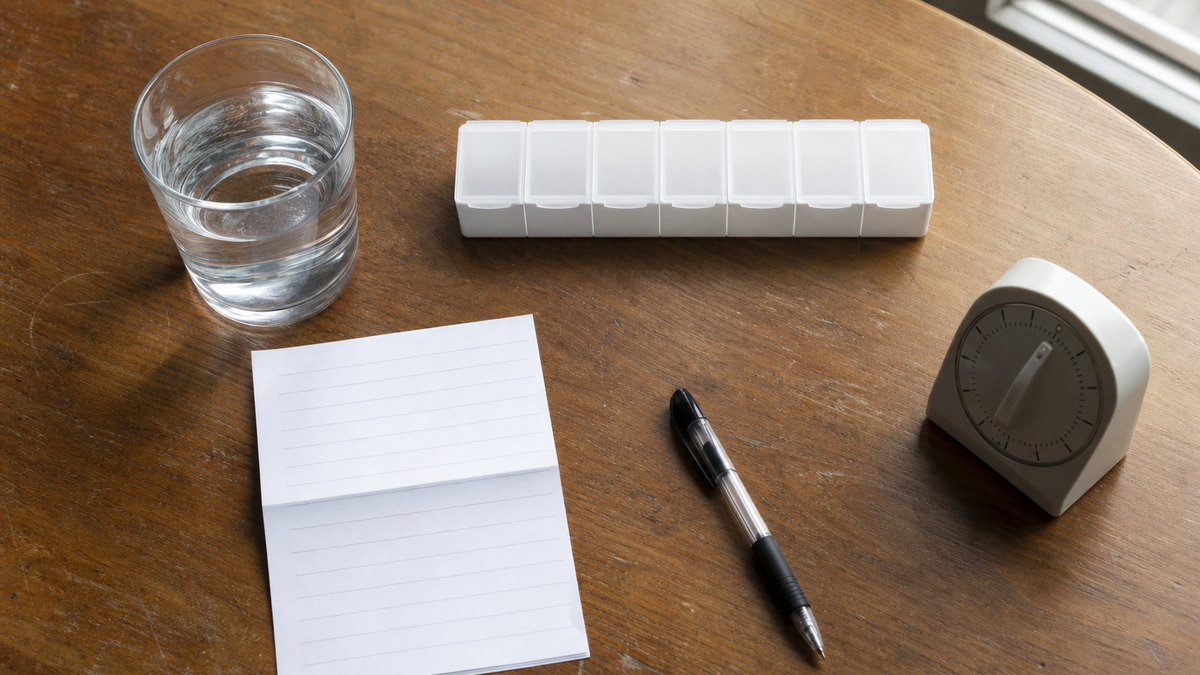
The short answer: GLP-1 based medicines can slow stomach emptying, so they may change how quickly some oral medicines reach the bloodstream. That does not mean every pill stops working. The effect depends on the GLP-1 based medicine, the oral drug, the formulation, and whether the oral drug needs a particular peak concentration or close laboratory monitoring. Current FDA labels call for targeted review, not a blanket change to every medication schedule.
Absorption speed is not the same as total exposure
Most oral medicines leave the stomach before much of their absorption occurs in the small intestine. When stomach emptying slows, a pill may arrive there later. Researchers often describe that with three measurements: peak concentration, time to peak, and total exposure over time. A lower or later peak can occur even when total exposure changes very little. That distinction is why the simple claim that GLP-1 medicines make pills ineffective is not supported by the evidence.
A systematic review of oral drug interaction studies found that injectable GLP-1 receptor agonists often produced an unchanged or lower peak and a later time to peak for tested medicines, while total exposure and clinically relevant outcomes generally did not change meaningfully. Most studies were performed in healthy participants, however, so the findings should be applied carefully to people with kidney disease and to medicines with a narrow therapeutic index.
Semaglutide: injection and tablet are not interchangeable
The June 2026 FDA weight-management label for semaglutide says the medicine delays gastric emptying and may affect oral medication absorption. The current label reports that semaglutide 1 mg weekly injection did not affect absorption of orally administered medicines in clinical pharmacology trials. For semaglutide tablets, it reports no clinically significant pharmacokinetic differences for the tested drugs, including metformin, warfarin, digoxin, and rosuvastatin. These findings are reassuring for the combinations studied, not proof about every pill.
Ready to start?
$199 Skeptics' Trial, see if it works for you
One-time $199 trial with physician evaluation and, only if a prescription is approved and the dispensing pharmacy can fulfill it for the patient's location, one month of compounded semaglutide; the pharmacy confirms packaging and shipping details before fulfillment. No long-term commitment. Standard care starts with a $119 physician review; medication is separate, and compounded semaglutide programs start at $166/month.
Start the 30-day trialOral semaglutide has its own evidence and administration rules. In the current label, total thyroxine AUC increased 33 percent after a single levothyroxine dose was given with oral semaglutide, while maximum concentration was unchanged. The same label instructs patients to take that oral semaglutide tablet on an empty stomach in the morning and wait at least 30 minutes before eating, drinking, or taking other oral medicines. Those are product-specific label facts, not a universal spacing rule for all GLP-1 based medicines. The label recommends monitoring the effects of oral medicines and considering added clinical or laboratory monitoring when a medicine has a narrow therapeutic index or already requires monitoring.
Tirzepatide has a specific early-dose pattern
Tirzepatide is a GIP receptor and GLP-1 receptor agonist, not a GLP-1-only medicine. This article uses "GLP-1 based medicines" as a plain-language umbrella while keeping each product's pharmacology distinct. Its February 2026 FDA weight-management label says the gastric-emptying effect was greatest after the first 5 mg dose and diminished after later doses. In the label's acetaminophen study, the first dose lowered the peak concentration and moved the peak one hour later, while total 24-hour exposure did not change. By week 6, the peak and timing were not meaningfully affected. This is a clean example of absorption rate changing without a meaningful change in total exposure.
Oral hormonal contraception is the important label-specific exception. A tirzepatide interaction study found lower peak and total exposure for the tested contraceptive components after a single dose. The label advises patients using oral hormonal contraceptives to switch to a non-oral contraceptive method or add a barrier method for 4 weeks after initiation and for 4 weeks after each dose escalation. That precaution should not be generalized to every GLP-1 receptor agonist. A review of six contraceptive interaction studies found the meaningful interaction in the tirzepatide study, while five studies of GLP-1 receptor agonists did not find a statistically or clinically meaningful effect.
Orforglipron adds a new 2026 nuance
Orforglipron is a once-daily oral GLP-1 receptor agonist approved on April 1, 2026. Its FDA label reports that acetaminophen peak concentration decreased 28 percent after the first 0.8 mg dose and that the effect diminished after repeated dosing at 17.2 mg. Its effect on oral contraceptive absorption was not evaluated in a clinical trial. The label advises patients using oral hormonal contraceptives to switch to a non-oral method or add a barrier method for 30 days after initiation and for 30 days after each dose escalation.
Orforglipron also has interactions involving drug-metabolizing pathways and a specific statin that are separate from delayed gastric emptying. That matters because not every interaction involving a GLP-1 based medicine and a pill can be explained by a slower stomach. A pharmacist or prescriber needs to review the exact pair of medicines rather than rely on a class slogan.
Which medication lists deserve a closer look
The safest approach is medication reconciliation, not guesswork. Bring the complete list, including prescriptions, over-the-counter products, vitamins, and supplements, to the prescriber and pharmacist. The current semaglutide and tirzepatide labels give extra attention to oral medicines that depend on reaching a threshold concentration, have a narrow therapeutic index, or require clinical or laboratory monitoring.
- Ask whether any medicine on the list needs a blood test, symptom check, or other monitoring after a GLP-1 based medicine starts or increases.
- Ask about product-specific administration instructions if the GLP-1 medicine itself is an oral tablet.
- Flag oral hormonal contraception for a label-specific discussion, especially with tirzepatide or orforglipron.
- Do not move, skip, split, or double doses to solve an assumed interaction without guidance.
Slower stomach emptying also matters in settings beyond routine pill absorption. Our guide to GLP-1 medicines and gastric emptying tests explains why symptoms, procedures, and the exact medicine can change the clinical question.
The bottom line
GLP-1 based medicines can change the timing and peak of some oral drugs, but a later peak does not automatically mean less total exposure or treatment failure. Semaglutide injection, oral semaglutide, tirzepatide, and orforglipron have different evidence and different label instructions. The useful question is not whether GLP-1 medicines affect pills in general. It is whether this exact medicine pair needs monitoring, a product-specific precaution, or no change at all. That answer belongs in a review with the prescriber and pharmacist who can see the full medication list.
Frequently asked questions
Do GLP-1 medicines make all oral medications less effective?
No. Slower stomach emptying can delay the peak or lower the peak concentration of some oral medicines without meaningfully changing total exposure. Effects differ by the GLP-1 based medicine and the pill being tested. Current labels recommend focused monitoring for certain medicines rather than changing every oral medication schedule.
Should I separate every pill from my GLP-1 dose?
There is no universal spacing rule. Some oral semaglutide formulations have a specific instruction to wait before taking other oral medicines, while injected products have different guidance. Follow the label for the exact product and ask a pharmacist or prescriber before changing medication timing.
Why are oral contraceptives discussed with tirzepatide?
A tirzepatide study found lower peak and total exposure for the tested oral contraceptive components after a single dose. Its FDA label therefore contains a specific precaution after treatment starts and after each dose increase. That finding should not be turned into a claim about every GLP-1 receptor agonist or every contraceptive method.
Does the stomach-emptying effect stay equally strong over time?
In acetaminophen interaction studies, the tirzepatide and orforglipron labels report the largest measured effect after the first dose and a diminished or absent meaningful effect after repeated dosing. This pattern is product- and study-specific.
Which oral medicines need the closest review?
Current semaglutide and tirzepatide labels emphasize medicines that need a threshold concentration to work, have a narrow therapeutic index, or require clinical or laboratory monitoring. The safest step is to give the prescriber and pharmacist a complete list of prescriptions, over-the-counter products, and supplements and ask which items fit those categories.
This article is informational only and not medical advice. Speak with a licensed physician before starting or changing any GLP-1 therapy. Individual results vary. New Hope Weight Loss is a physician-supervised medical weight loss clinic in Costa Mesa, CA. Eligibility for treatment is determined during the medical consultation. Compounded semaglutide and compounded tirzepatide are not the same products as Wegovy®, Ozempic®, Mounjaro®, or Zepbound®.